
Engineer the Future of Communication
Pursue M.Tech in Electronics and Communication Engineering at TITE and build expertise in VLSI design, wireless systems, embedded technologies, and next-generation communication networks.
M.Tech in Electronics and Communication Engineering at TITE, Bhubaneswar
Intake Capacity
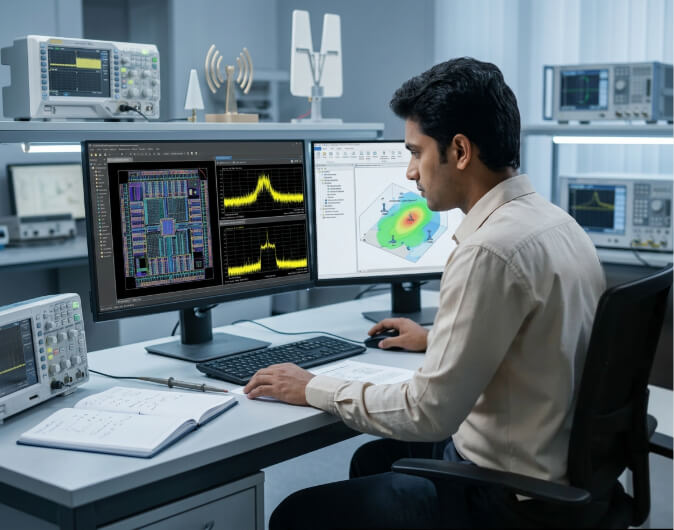
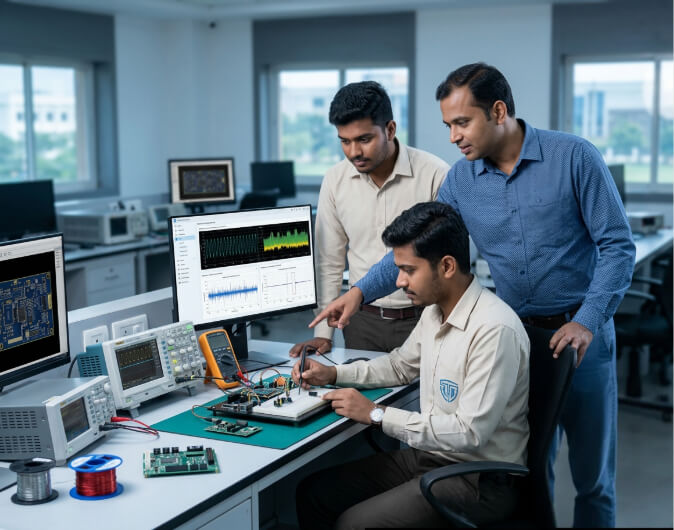
The Department of M.Tech Electronics and Communication Engineering at TITE, Bhubaneswar, has built a strong reputation for delivering rigorous, research-driven postgraduate electronics engineering course in Bhubaneswar. Affiliated with Biju Patnaik University of Technology (BPUT) and approved by AICTE, the M.Tech ECE programme at TITE is structured to give students deep command over both foundational principles and emerging technologies. With state-of-the-art laboratories, including dedicated facilities for Signals & Systems, Wireless Communication, Analog & Digital Communication, and Microprocessors & Microcontrollers, and expert faculty members with advanced degrees from premier institutions who bring active research experience, TITE qualifies as one of the best M.Tech ECE colleges in Odisha.
What makes our M.Tech ECE program different than other postgraduate electronics engineering courses in Bhubaneswar is its deliberate focus on outcomes. Students graduate not just with a degree, but with hands-on project portfolios, research exposure, and the kind of technical clarity that employers and research institutions value. The M.Tech ECE curriculum at TITE covers advanced digital communication, embedded systems, VLSI design, signal processing, RF & microwave engineering, and evolving domains like IoT and AI-integrated electronics, offering a comprehensive M.Tech Electronics and Communication Engineering in Bhubaneswar, Odisha that prepares students for roles in core engineering, R&D, academia, and high-growth technology sectors. With a culture of mentorship, transparent fee structures, and strong industry connections, TITE gives every M.Tech ECE aspirant in Odisha the right platform to build a career that goes beyond the ordinary.
Programme Name: M.Tech in Electronics & Communication Engineering

OURVISION

OURMISSION
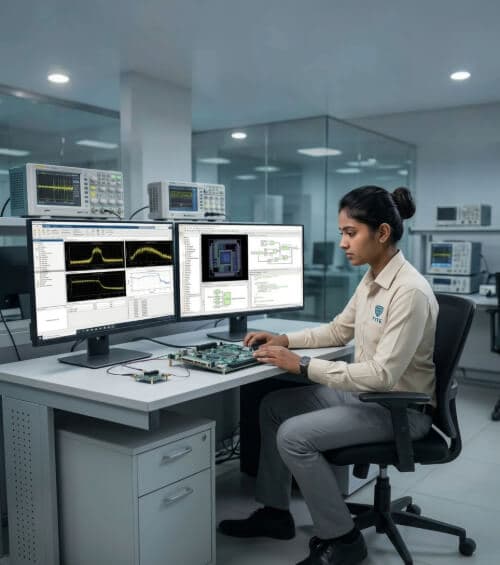
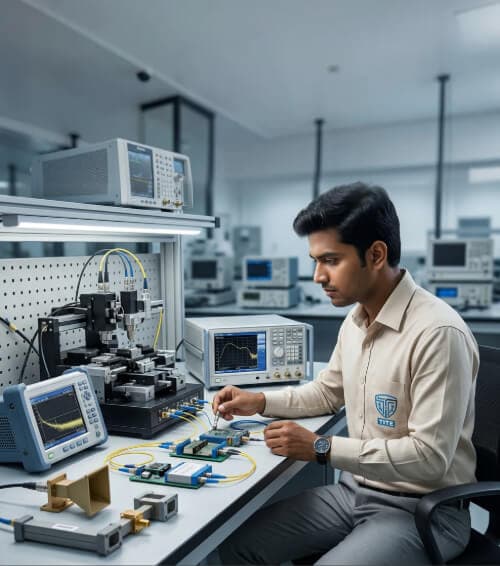
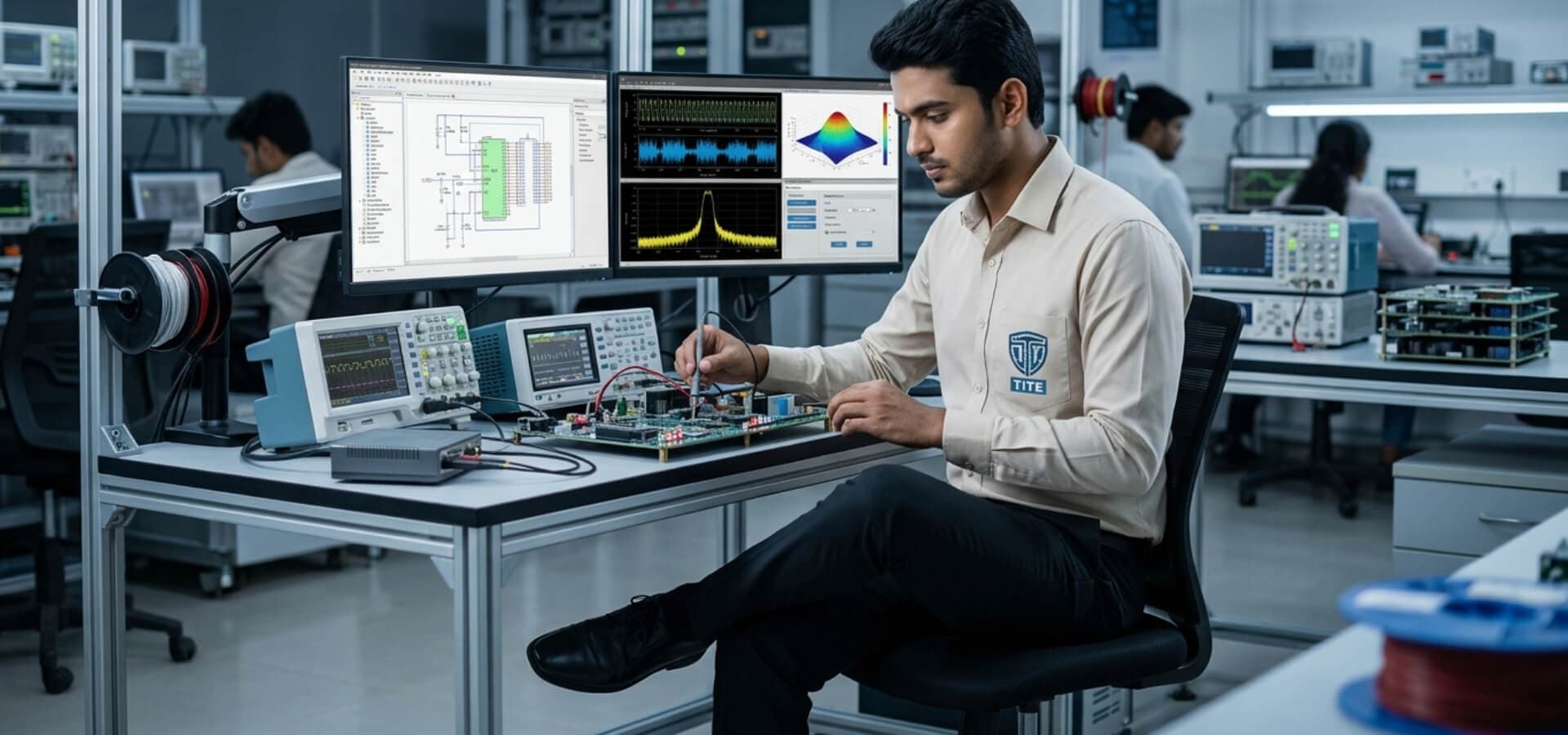
Advanced Electronics and Communication Engineering Lab Facilities
Join one of the best B.Tech, M.Tech and MBA colleges in Odisha and build a future powered by innovation, AI, and real-world skills.


_Lab.jpg&w=3840&q=75)
M.Tech ECE Admissions 2026 Bhubaneswar, Are Open at TITE.
Apply NowWhy Choose TITE for M.Tech in Electronics & Communication Engineering?

Expert Faculty with Real Research Depth
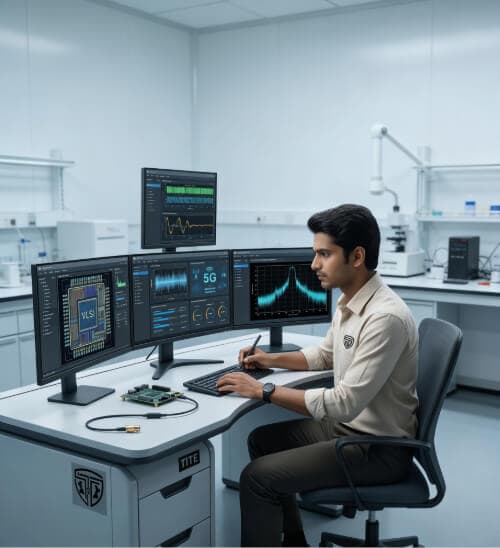
The M.Tech faculty members at TITE don’t just teach; they research, publish, and innovate. With specialisations spanning from 5G and 6G wireless technology to advanced communication systems, our department brings the cutting edge of engineering science directly into the classroom. Many faculty members are actively publishing in IEEE conferences and international journals, giving students direct access to emerging research.
Industry-Aligned Curriculum Built for Today's ECE Landscape
The M.Tech ECE curriculum at TITE covers exactly what leading technology employers look for — VLSI design, digital signal processing, wireless communication systems, embedded technologies, RF & microwave engineering, optical communication, and AI-integrated electronics. Updated to reflect Industry 4.0 and beyond, the programme ensures graduates are relevant from day one of their careers.
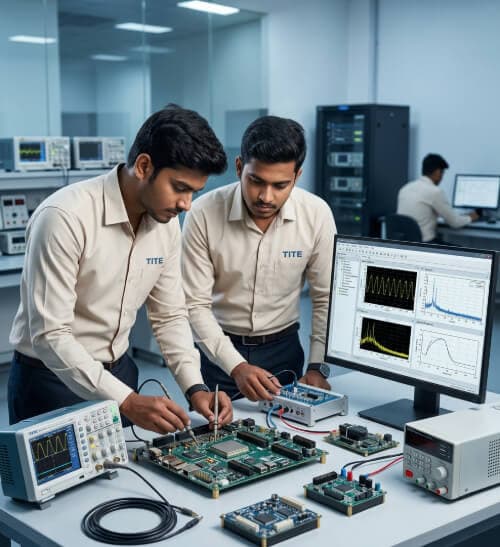
Advanced Labs That Go Beyond Textbooks
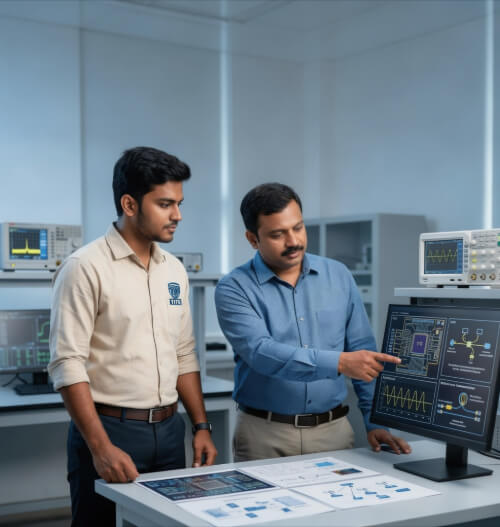
TITE's M.Tech ECE students have access to well-equipped, purpose-built laboratories stocked with industry-standard hardware and software. Hands-on experimentation, simulation, and project work are integrated into the programme from the first semester onwards.
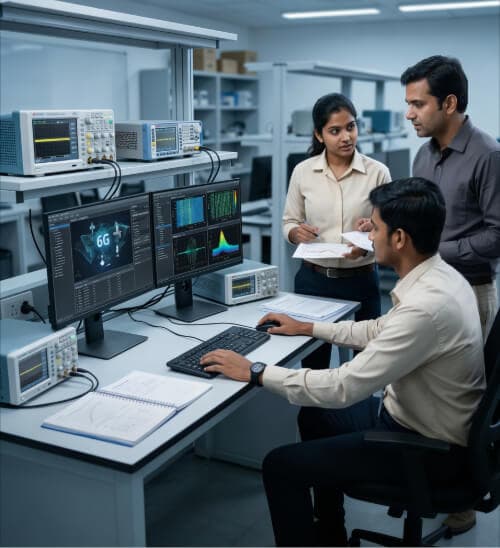
Exceptional Research Culture
TITE offers a unique R&D Hub. M.Tech students get the opportunity to be a part of the department's active research portfolio, including work in 6G wireless technology, massive MIMO, IoT systems, and artificial intelligence. Collaborative research with national R&D centres, academic institutions, and industry partners means students can work on live projects, publish at conferences, and build a credible research profile well before their graduation.

Strong Placement Support and Career Outcomes
TITE has built consistent placement support for its M.Tech ECE graduates, connecting students with opportunities in telecommunications, semiconductor companies, embedded systems firms, defence establishments (DRDO, BEL, ISRO), and leading IT multinationals. Career development sessions, industry interface events, internship facilitation, and alumni networks actively contribute to post-degree success because the outcome matters as much to us as your education.
The Future Is TITE-Made
AI is reshaping industries. At TITE, we teach you to use it to shape your career—with guaranteed placements.

Bibhudutt Behera
Senior Associate — Technology & Transformation (2019–2023, CSE)


TITE didn't just give me a degree — it gave me direction. The faculty pushed us to think beyond textbooks, and the exposure to real-world tools prepared me for the demands of a company like Deloitte. Every challenge I face at work today, I can trace back to a lesson I learned on that campus.






Message from the head of department

Outcome-Based Education Framework
Program Outcomes (POs)
PO1 – Engineering Knowledge
Graduates will be able to apply the knowledge of mathematics, science, engineering fundamentals, and engineering specialization to solve complex engineering problems.
PO2 – Problem Analysis
Graduates will possess the ability to identify, formulate, review research literature, and analyze complex engineering problems using principles of mathematics, natural sciences, and engineering sciences to arrive at well-founded conclusions.
PO3 – Design and Development of Solutions
Graduates will be capable of designing solutions for complex engineering problems, including the design of system components or processes that meet specified needs while considering public health, safety, cultural, societal, and environmental factors.
PO4 – Investigation of Complex Problems
Graduates will be adept at conducting investigations using research-based knowledge and methods, including experiment design, data analysis, and synthesis, to derive valid conclusions.
PO5 – Modern Tool Usage
Graduates will be skilled in selecting and applying appropriate modern engineering and IT tools and techniques for complex engineering tasks, with a clear understanding of their limitations.
PO6 – The Engineer and Society
Graduates will be able to assess societal, health, safety, legal, and cultural issues informed by contextual knowledge, and understand their responsibilities as professional engineers.
PO7 – Environment and Sustainability
Graduates will understand the impact of engineering solutions in societal and environmental contexts and demonstrate a commitment to sustainable development.
PO8 – Ethics
Graduates will uphold ethical principles and commit to professional ethics, responsibilities, and norms of engineering practice.
PO9 – Individual and Team Work
Graduates will be effective team members and leaders, capable of working independently or collaboratively in diverse and multidisciplinary teams.
PO10 – Communication
Graduates will be able to communicate effectively on complex engineering activities with peers, the engineering community, and society at large, through clear reports, documentation, presentations, and instructions.
PO11 – Project Management and Finance
Graduates will demonstrate knowledge of engineering and management principles and apply them to manage projects effectively as individuals and team leaders in multidisciplinary environments.
PO12 – Life-Long Learning
Graduates will recognize the need for lifelong learning and be equipped to independently acquire and apply new knowledge and skills in the context of technological advancements.

Frequently Asked Questions
What is the scope of MTech in ECE?
Highly specialized, well-paying positions in the semiconductor, telecom, and core hardware industries are accessible with an M.Tech in Electronics and Communication Engineering (ECE). It equips graduates with extensive technical knowledge in fields including VLSI, Embedded Systems, and AI/ML, preparing them for careers in R&D, PhD programs, or jobs in prestigious international companies.
Which branch is best for MTech in ECE?
The "best" M.Tech program in ECE will depend entirely on your professional objectives, however VLSI Design and Embedded Systems are often regarded as the greatest options for semiconductor possibilities, high wages, and core industry placements.
Which ECE job has the highest salary?
The highest-paying positions after M.Tech ECE are found in semiconductors, hardware, and specialized systems. Top earners frequently receive compensation packages comparable to those of senior software engineers because these jobs need in-depth knowledge of electrical and physics.
Is ECE has future scope?
Indeed, the field of M.Tech in Electronics and Communication Engineering (ECE) has a bright future ahead of it. It powers vital contemporary technologies like 5G/6G, IoT, AI-integrated devices, and semiconductor manufacturing by sitting at the nexus of hardware and software.
Which core specializations are covered in the M.Tech ECE curriculum at TITE?
The industry-aligned curriculum spans foundational and cutting-edge domains including Advanced VLSI Design, Embedded Systems, Digital Signal Processing (DSP), RF & Microwave Engineering, Optical Communication, and Industry 4.0 domains like IoT and AI-integrated electronics.
